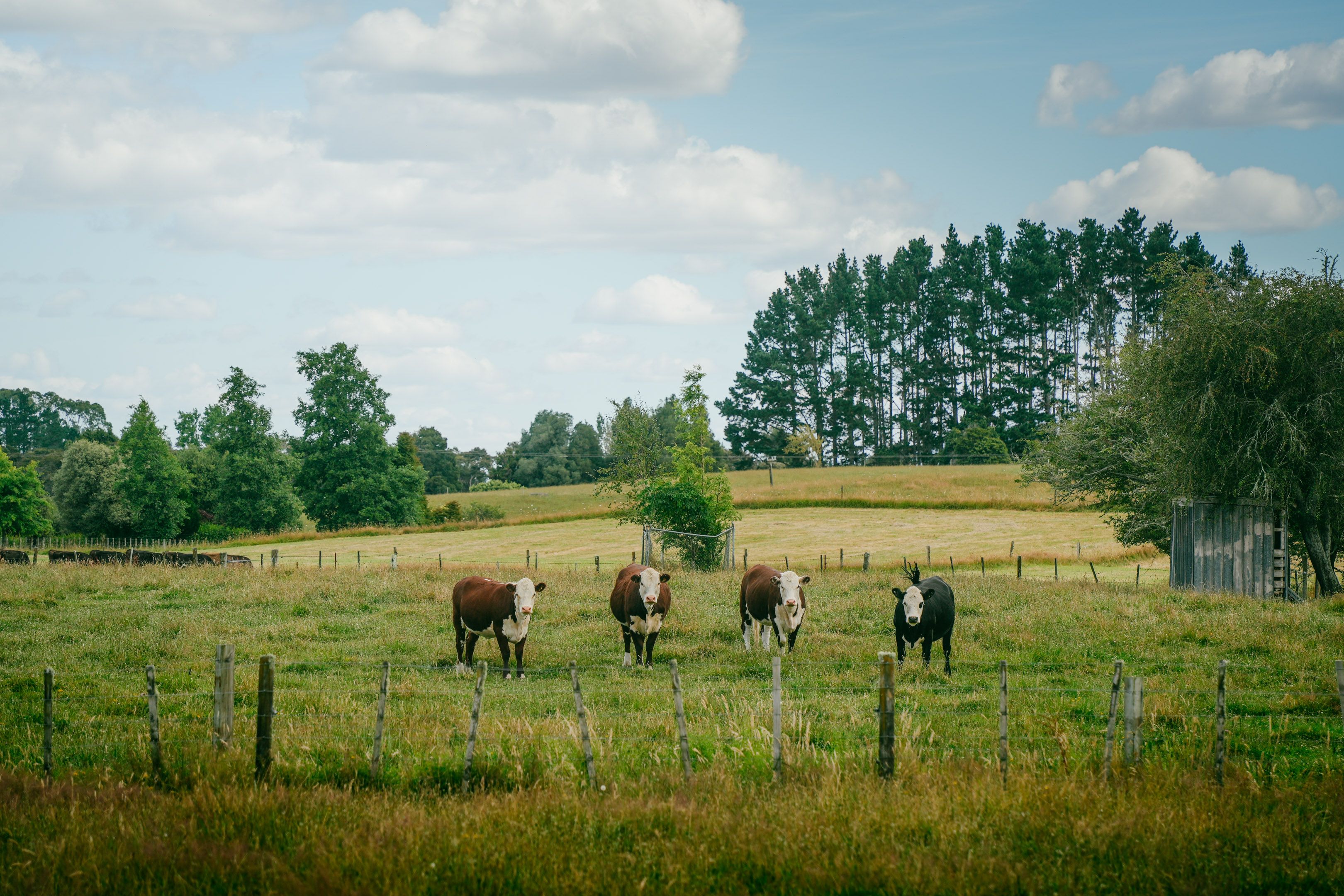
The Five Freedoms are the internationally recognised base standard for animal welfare. In 2020 New Zealand adopted the Five Domains model, which goes further: it recognises that every physical aspect of an animal's welfare has an emotional experience attached, and that welfare can be positive - not just the absence of suffering.
Observation is a habit with three questions: What do I see? Why has this happened? What does it mean? Cows are herd animals with a social structure - the mob often follows the lead cow to graze or lie down. Within every herd there are at-risk groups, and they're usually the first to signal that something is wrong.
Eyes and ears attentive, curious about you. Hearing, smell and sight are the animal's main senses - dullness is an early warning.
Unwell cows lose their shine, and hair may stand on end. The coat is a daily health report you can read from the gate.
Rumen and gut fill are the earliest signs of insufficient feed - visible well before weight loss shows.
Sunken eyes, tight skin and dry dung all point to an animal not drinking enough or losing too much fluid.
Watch for an arched back, a raised tail, or a bobbing head when walking - all signs of discomfort worth investigating.
Good hoof shape, no lice or mange. Cows need about 14 hours a day lying down - resting hooves, with 30% more blood flow to the udder.
Behaviour always has a driver. Broadly there are three:
Animals need enough dry matter to meet energy and protein requirements for growth and production - but mineral nutrition matters just as much, from macro minerals like calcium and magnesium to trace elements like copper, cobalt, iodine and selenium. Pasture analysis with experienced interpretation (for example using the DietDecoder) is an effective way to diagnose mineral limitations across the herd; blood testing is useful for individual sick animals.
NZ farmers are often used to seeing quite loose dung in dairy cattle, but loose, inconsistent dung isn't necessarily healthy - it's worth learning to score it properly. View a dung/manure scoring guide
Cows start to experience heat stress above about 20 °C - common across New Zealand summers - and the earliest indicator is breathing rate. High-producing dark-coated cows are most at risk. Check up to ten animals in the paddock, especially on summer afternoons. Shade, plenty of quality water, yard sprinklers and shifting milking or mustering times all reduce the load.
Panting or open-mouth breathing - check the breathing rate first, it's the earliest sign.
Animals stand to shed heat. If the mob is on its feet and not eating on a hot day, take note.
Increased drinking and crowding at troughs - make sure flow rates keep up on hot afternoons.
Cattle slow to walk to the shed or between paddocks are telling you they're carrying too much heat.
Sheep lose about 65% of their heat by panting, so the way they're breathing tells you the extent of the stress:
Body Condition Scoring (BCS) is a visual estimate of an animal's body fat reserves - and it beats the scales for practical decision-making. Cows keep growing until about six years old, so liveweight can rise without condition improving at all. BCS tracks the reserves that actually matter.
Condition trends show whether your feed strategy is working - and what the herd will need next.
Score tells you which cows to dry off, and when, to hit calving targets in the right condition.
Condition at mating - and condition lost after calving - explain much of your reproductive results.
Score in the paddock: at least 70 cows for a dairy herd, and a good representative sample (20 or more) for beef cattle.