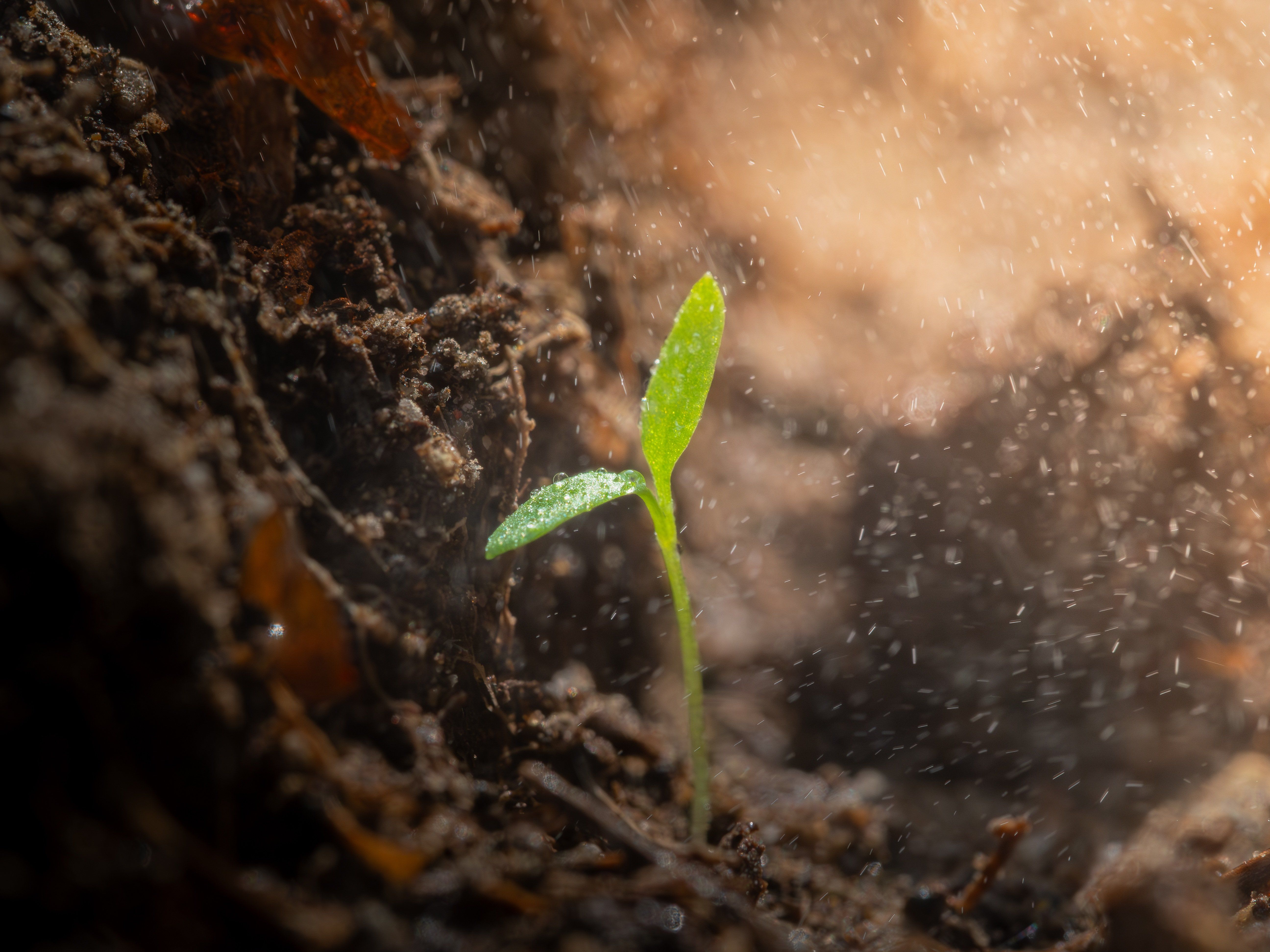
Like us, plants have essentials for survival: sunlight, air, water, nutrients and the right temperature. With water, carbon dioxide and sunlight they photosynthesise - a reaction in the leaves that makes glucose (food) and oxygen, which enzymes then break down for the energy to grow. But healthy growth also needs nutrients from the soil, and that's what fertilisers provide.
The raw inputs for photosynthesis - carbon, hydrogen and oxygen come free from air and water.
Nitrogen, phosphorus, potassium, sulphur, calcium, magnesium and sodium are all needed for growth.
Tiny amounts of boron, copper, iron, cobalt, manganese, molybdenum, chlorine, iodine, selenium and zinc keep growth healthy.
Some elements aren't needed by the plant but matter for the stock grazing it.
Nitrogen, phosphorus and potassium (NPK) are needed in the greatest quantities and matter most for growth. But they aren't necessarily depleted in New Zealand soils - often they're present yet unavailable to plants, because the soil biology that unlocks and cycles them has been knocked back. Synthetic fertiliser, overgrazing and cultivation can all reduce that biological activity.
Different fertilisers carry different nutrients: potash supplies potassium, urea supplies nitrogen, elemental sulphur supplies sulphur, and reactive rock phosphate and superphosphate supply phosphorus. New Zealand's story started with burning forest for ash; once that was depleted, early farmers turned to compost, manure, blood and bone, and ground nutrient-rich rocks.
'Super' is New Zealand's most important fertiliser, developed to fix a shortage of soil phosphorus. It's made by reacting finely ground phosphate rock with sulphuric acid, which releases phosphate rapidly into the soil for plants to use. Manufacture began here in 1882, and over 3 million tonnes are now produced annually - its main nutrients being calcium, sulphur and phosphorus. Combined with potash for potassium, it promotes clover, which then fixes atmospheric nitrogen into plant-available form.
As farming intensified - more produce from the same land - manufactured nitrogen proved more productive than relying on clover, because it can be applied at just the right time. Urea became the main nitrogen fertiliser, especially on dairy farms, and DAP (di-ammonium phosphate, from the 1960s) supplies both nitrogen and phosphorus and is now in common use.
Companies blend superphosphate with potash and add nitrogen forms such as ammonium sulphate where needed, plus other elements - different nutrient combinations mixed to suit the needs of the soil and plants.
Growing awareness of the environmental cost of chemical fertilisers has driven demand for safe, natural alternatives - and the key difference is that biological fertilisers feed the soil life (earthworms, fungi and bacteria) as well as the plant. Soil health needs much more than NPK: without the right biology, plants and animals can't reach their potential, because biology is what recycles nutrients and fixes atmospheric nitrogen.
Humates are organic material from leonardite or lignite brown-coal fields - carbon-dense and rich in humus, humic and fulvic acids, and regarded by many agronomists as one of the most important factors in building soil fertility. About 67% carbon, they carry three powerful biological acids proven to lift plant growth and yields, with a very high cation exchange capacity (around 250) and excellent water-holding (about 60%).
That high cation exchange capacity lets soil hold onto nutrients and release them as needed - greatly reducing losses through leaching and gassing off to the atmosphere. Available dry or liquid, applied alone or with your NPK fertiliser, humates help build soil organic matter, plant nutrition and yields.
Made by enzymatic hydrolysis of fish at low temperature, which retains proteins, amino acids, natural vitamins, 7–10% fish oil (including omega-3) and 7–10% hydrolysed fish bone. Adding seaweed and a humic/fulvic carbon extract boosts bacterial and fungal activity and the availability of calcium and magnesium.
Hydrolysed fish uses the 60–70% of each fish left after filleting - heads, frames, skin and fins - liquefied and screened so it sprays easily, loaded with enzymes, macro- and micro-nutrients, trace elements, amino acids, vitamins and omega oils. Typical NPK is around 2-4-1; sprayed as a foliar feed the chelated nitrogen is available to the crop the day it's applied. (Beware cheaper 'fish emulsion' - a cooked-down by-product that smells bad and clogs sprayers.)
Seaweed is an organic storehouse of over 60 naturally occurring nutrients and amino acids. Its growth promoters (auxins, cytokinins, gibberellins) enhance plant development, colour and vigour, and it increases hardiness against frost, heat and drought. Used as a seed inoculant it speeds germination and root development - an excellent addition to any fertiliser programme.
Hydrolysed fish can lift yield and relative feed value - one farmer reported daily dry-matter needs down 50% and mineral needs down 80% while holding body condition.
Manure has been found to break down in about half the time, with more dung beetles and fewer flies as biology picks up.
Biologically active soils retain moisture and release nutrients - greater production, faster rotation, quicker recovery from stress.