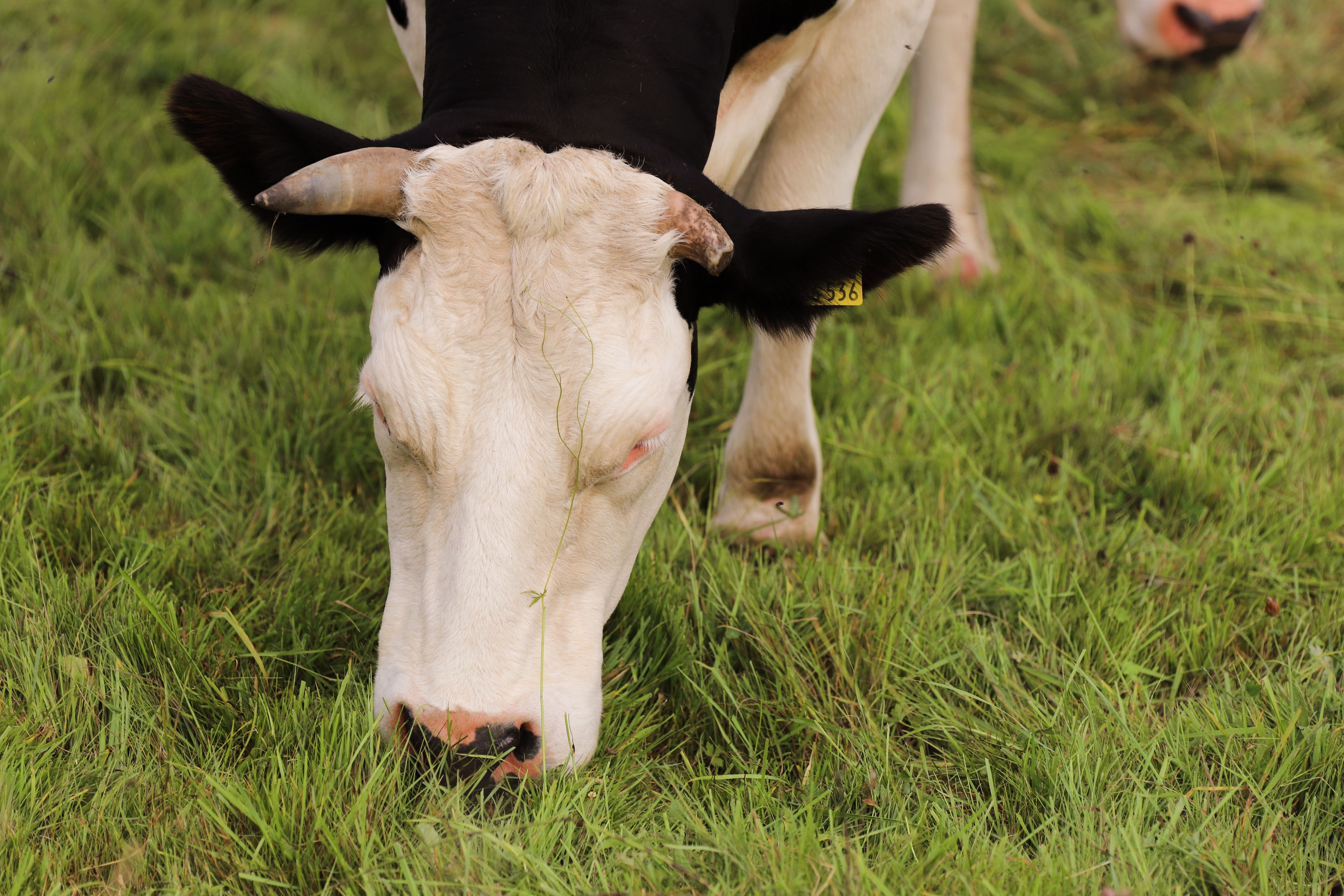
Dense mob grazing is one of the strongest tools within adaptive grazing management: an intensive rotational system with high stock density, moved often - usually every one to three days. What sets it apart from ordinary rotational grazing is the long rest between grazings and the taller covers stock graze into. Compared with set-stocking, that longer recovery develops deeper roots and better soil structure, and boosts pasture resilience.
It's a tool, not a rule. Dense mob grazing doesn't suit every context - avoid it on wet paddocks through winter, during calving and lambing, and wherever animal welfare calls for lower densities or temporary set stocking. Match the density to the paddock, the season and the stock.
The aim is to graze one-third, trample one-third and leave one-third - a higher residual that keeps the soil covered and fed.
Stock eat all the available biomass for a lower residual. Grass utilisation is higher, but you trade away some ground cover - which system you choose is personal preference.
Mob grazing lifts grass utilisation by roughly 28–78% over set-stocking (AHDB), with the higher end from non-selective grazing.
Grazing tall grass reduces larvae intake, and long rests break the parasite cycle - though you should still monitor with faecal egg counts.
In a set-stocked paddock, leaves get bitten off before they can photosynthesise and rebuild root reserves - the plant never gets ahead. This is overgrazing. Rest changes everything: given time to regrow, the plant uses its leaves to build deeper roots and store sugars, which is what carries it through hard weather and extends the grazing season.
Those stored root sugars are the engine of soil health. Some leak out through the roots to feed the microbes below ground, building soil carbon and organic matter. Feed the plant properly above ground and you feed the whole living system beneath it.
A grazing plan matches feed supply to animal demand - but the real skill is adapting that plan to what the pasture is actually doing and the residuals you're leaving. That's adaptive grazing management. Each day, think about feeding your stock both above ground and below (the soil biology): keep green leaf working as a solar panel, plan spring grazing so the biggest solar panel is on farm through the long days of summer, leave enough residual to keep photosynthesis running, and minimise bare ground and soil disturbance from stock and vehicles.
First, two words that often get muddled. Rest is the period during which pasture is not actively grazed. Recovery is when the plant reaches a mature leaf stage and rebuilds its root reserves. You rest a paddock so it can recover - and it's recovery, not the calendar, that tells you it's ready.
Let plants reach an adequate size - at least 6–8 inches on average - before grazing.
Check at least 10 spots in the paddock. Blunt tips left from last grazing mean the pasture isn't ready yet.
Top-graze the upper third - if the canopy is 8 inches, take the top 2 and leave 6 inches of residual.
As you get comfortable, raise residuals across the farm gradually - for example, 5 cm more over 5 years.
Frequency is set by your lifestyle and labour, but more shifts speed regeneration - if you shift daily now, try twice daily.
Pastures are grazed to lower residuals, with slower growth, longer rotations and longer recovery. Bale grazing can help in drier conditions - take care to minimise vehicle damage when feeding out, and plan ahead by placing bales in the paddock beforehand.
Feed animals adequately while managing the feed saved over winter and rising pasture growth. For dairy farmers, the Spring Rotation Planner is a handy tool for balancing supply and demand.
Build green cover going into summer. Slowly reduce the supplement you make and push the surplus feed 'forward'; you might drop one supplement paddock out of the normal programme to keep it in the round.
A tool to conserve surplus feed, re-seed pastures, improve sward density and diversity, and manage weeds. Designate a reserve pasture - or skip a paddock each rotation - as stockpiled feed for drought or winter, and try to graze it within 90 days.
Going into summer with higher covers and more solar panel improves moisture retention and resilience through the dry while still providing quality feed. In autumn, increase rotation and recovery as growth slows, to build cover for winter.
Take time to watch the changes - more biodiversity above ground, more rooting depth and biological activity below, and healthy, well-fed animals. That's your reward.